
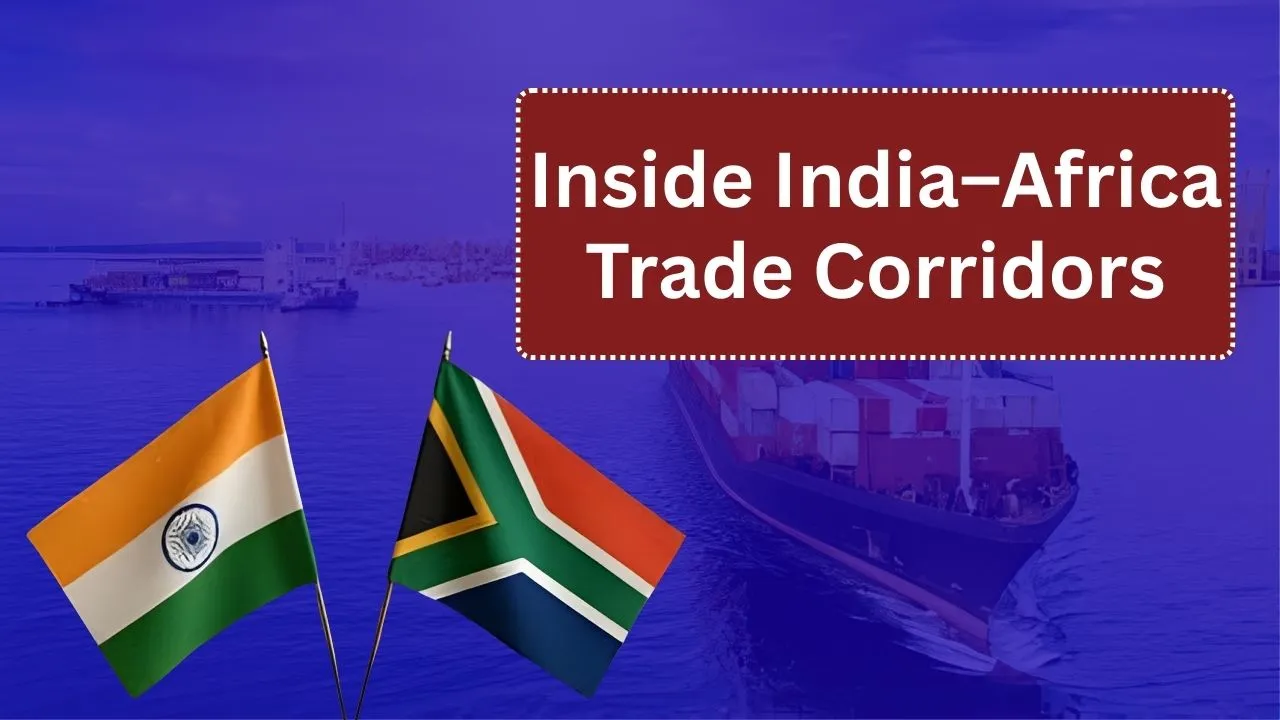
India–Africa trade is largely driven by maritime logistics, with over 90% of goods transported by sea. This makes ports, shipping lanes, and supply-chain efficiency critical to trade growth. Over the past decade, both regions have invested heavily in port modernization, container handling capacity, customs digitization, and inland transport connectivity. These improvements are reshaping traditional trade routes and creating faster, more reliable corridors linking South Asia with East, West, North, and Southern Africa.

Africa’s rising demand for pharmaceuticals, automobiles, machinery, refined petroleum products, food items, and consumer goods has pushed Indian exporters to optimize shipping times and logistics costs. At the same time, Africa exports crude oil, minerals, agricultural products, and raw materials back to India through the same corridors, creating two-way trade flows that strengthen economic interdependence.
India–Africa Trade Corridors at a Glance – Overview
| Primary Mode | Maritime (over 90% of trade) |
| Key Indian Ports | Mumbai, Mundra, Nhava Sheva, Chennai |
| Key African Ports | Durban, Mombasa, Lagos, Alexandria |
| Major Routes | Indian Ocean, Red Sea, Suez Canal |
| Transit Time | 12–30 days depending on destination |
| Cargo Types | Containers, bulk, liquid cargo |
| Logistics Role | Cost, speed, reliability |
| Trade Direction | Two-way (exports & imports) |
| Growth Driver | Africa’s rising consumption |
| Future Focus | Port modernization & digital logistics |
Major Indian Ports Powering Africa Trade
India’s west and east coast ports form the backbone of its Africa-facing trade corridors.

Western India Ports: Ports such as Nhava Sheva (Jawaharlal Nehru Port) and Mundra Port handle the largest share of India–Africa trade. These ports are strategically positioned along the Arabian Sea, allowing shorter sailing distances to East and Southern Africa. Key strengths include:
- High container throughput
- Dedicated Africa service lines
- Integrated rail and road connectivity
Eastern India Ports: Ports like Chennai, Visakhapatnam, and Kolkata serve trade with East Africa, particularly Kenya, Tanzania, and Mozambique. These ports are crucial for machinery, vehicles, and bulk cargo.
An Indian port authority official noted, “Western ports handle most Africa-bound cargo due to proximity, deep-draft capacity, and container infrastructure.”
Also Read India–Africa Trade Explained: $100 Billion Milestone and Country Trends
Africa’s Key Port Gateways
- East Africa: East African trade with India flows primarily through Mombasa (Kenya) and Dar es Salaam (Tanzania). These ports serve not only their home countries but also landlocked nations such as Uganda, Rwanda, and South Sudan.
- West Africa: In West Africa, Lagos (Nigeria) and Tema (Ghana) dominate India-bound trade. These ports handle high volumes of pharmaceuticals, consumer goods, and vehicles from India.
- Southern Africa: Durban Port (South Africa) is Africa’s busiest container port and a major destination for Indian exports, especially refined petroleum products and automotive components.
Key Sea Routes Connecting India and Africa
- Indian Ocean Route: The primary trade corridor runs across the Indian Ocean, connecting western Indian ports to East and Southern Africa. This route offers relatively direct access and lower transit times.
- Red Sea and Suez Canal Route: Trade with North Africa, including Egypt and Morocco, often passes through the Red Sea and Suez Canal. While longer, this route provides access to Mediterranean markets.
Types of Cargo Moving Through the Corridors
India–Africa trade involves a diverse mix of cargo types:
- Containerized goods: pharmaceuticals, textiles, consumer products
- Bulk cargo: grains, coal, fertilizers
- Liquid cargo: petroleum products, chemicals
An African trade official remarked, “India’s ability to supply both industrial and consumer goods strengthens corridor utilization.”
Inland Logistics and Last-Mile Connectivity
Ports are only part of the story. Inland transport railways, highways, and dry ports plays a critical role in moving goods to final destinations.
African countries are investing in:
- Rail corridors from ports to inland cities
- Logistics parks and bonded warehouses
- Customs digitization to reduce clearance times
An infrastructure planner noted, “Efficient inland logistics determine whether ports become bottlenecks or growth engines.”
Challenges Facing India–Africa Trade Corridors
Despite progress, challenges remain:
- Port congestion during peak seasons
- High inland transport costs in Africa
- Customs delays and documentation complexity
- Limited cold-chain infrastructure
Both regions are addressing bottlenecks through:
- Port automation and digitized customs
- Direct shipping services reducing transshipment
- Investment in deep-water port capacity
- Public–private partnerships in logistics
These upgrades aim to reduce transit time and improve reliability, making Indian exports more competitive.
A logistics policy advisor stated, “Reducing logistics costs is the single biggest opportunity to expand trade volumes.”
Why This Matters?
India–Africa trade corridors matter because logistics determine the real cost and speed of trade, often more than tariffs or product prices. Efficient corridors allow Indian exporters to reach African markets faster, cheaper, and more reliably key advantages in competitive consumer and industrial sectors. For African economies, these corridors ensure steady access to affordable medicines, machinery, fuel, and essential goods that support development and industrialization.
As Africa’s population and purchasing power grow, demand for Indian goods is expected to rise sharply. Without strong trade corridors, this demand would translate into delays, higher prices, and supply disruptions. Modern ports, efficient shipping routes, and reliable inland logistics transform trade from occasional shipments into integrated supply chains.
These corridors also support two-way economic growth. African exports of minerals, oil, and agricultural products depend on the same infrastructure to reach Indian markets. Strong corridors therefore strengthen mutual dependence rather than one-sided trade.
From a strategic perspective, India–Africa trade corridors enhance South–South cooperation and reduce reliance on traditional transshipment hubs. They also attract investment, create jobs in logistics and manufacturing, and encourage regional integration within Africa itself.
In short, trade corridors are not just physical routes they are economic multipliers. As India and Africa continue to deepen their partnership, the efficiency of these corridors will largely determine how big, balanced, and resilient that trade relationship becomes in the years ahead.
Key Takeaways
- India–Africa trade relies heavily on maritime corridors
- Western Indian ports dominate Africa-bound exports
- Mombasa, Lagos, and Durban are key African gateways
- Logistics efficiency shapes trade competitiveness
- Infrastructure upgrades are transforming corridors
FAQs
What is the main mode of India–Africa trade?
Maritime shipping accounts for over 90% of trade.
Which Indian ports handle the most Africa trade?
Nhava Sheva and Mundra are major hubs.
Which African ports are most important for India?
Durban, Mombasa, and Lagos are key gateways.
Why are trade corridors important for exporters?
They reduce costs, transit time, and supply risks.
Are India–Africa trade routes improving?
Yes, through port modernization and logistics upgrades.